ISR

Indoor Surveillanceand Reconnaissance

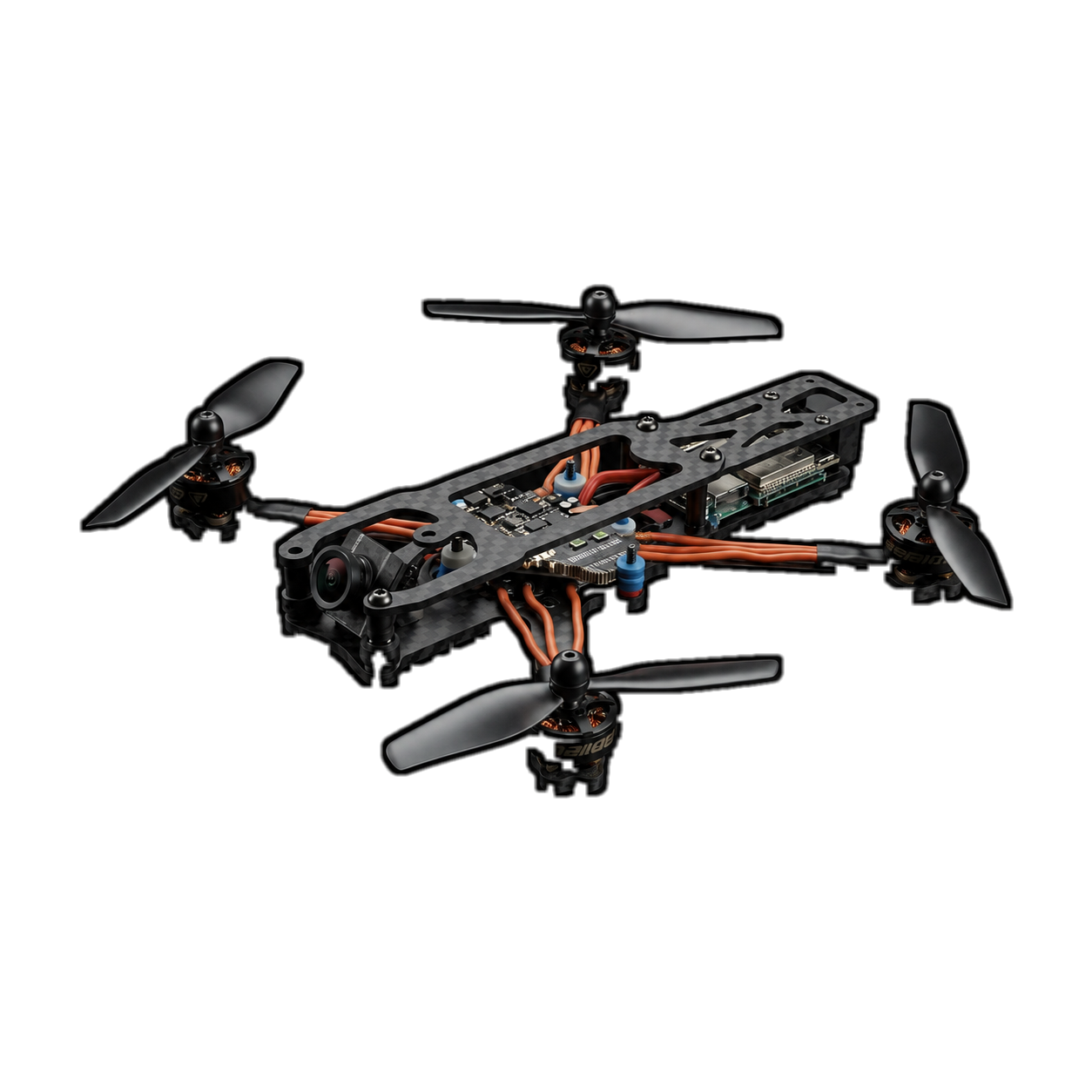
Render of the autonomous micro-UAV: carbon-fibre frame with flight controller, camera, four motors and propellers

Tap a component to inspect it

A palm-sized autonomous UAV designed for navigation, perception, and human detection in GPS-denied environments.

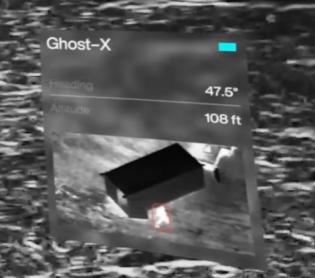
Reconnaissance feed: Ghost-X telemetry card over an aerial view, with a detected person marked
  • Indoor ISR
  • GPS-denied environments
  • Human detection
  • Obstacle awareness
  • Autonomous navigation

Autonomous Tactical Indoor Reconnaissance UAV

The Autonomous Tactical Indoor Reconnaissance UAV is a compact micro-UAV designed to provide real-time situational awareness in GPS-denied and high-risk indoor environments. Built around an ultra-lightweight 2-inch platform, the system combines visual reconnaissance, human detection, obstacle awareness, and autonomous navigation capabilities. An onboard digital camera and multizone Time-of-Flight sensor collect environmental data, while an ESP32-S3 transmits it to a local Ground Control Station for GPU-accelerated AI processing. By offloading heavy computation from the aircraft, the UAV remains lightweight and agile while supporting real-time perception and mapping. The platform is being developed for confined environments where conventional drones face limitations in navigation, signal reliability, and obstacle avoidance.

03 — Hardware

Hardware Architecture & Weight Optimization

Form follows function. Every single gram was optimized around a strict 2S power budget and a target thrust-to-weight ratio exceeding 3:1.

2S
Power budget
>3:1
Thrust-to-weight target
64
ToF ranging zones (8×8)
4 × 15 A
Integrated ESC

The Core Specifications (BOM)

01Flight Controller & ESC

DarwinFPV 1–3S F411 15A Bluejay AIO

The central flight-control platform combines an STM32F411-based flight controller, four 15A ESCs, and integrated ELRS functionality within a highly compact PCB. Its integrated 5V BEC is intended to supply the onboard peripheral electronics without requiring a separate voltage regulator, reducing both system mass and wiring complexity.

  • STM32F411
  • 4 × 15 A ESC
  • ELRS
  • 5 V BEC
02Onboard Telemetry & Communications

Waveshare ESP32-S3-Zero (N8R8)

The ESP32-S3 serves as the UAV's lightweight communication and sensor interface. It collects digital imagery and spatial sensor data, packages the information onboard, and transmits compressed JPEG frames and ranging matrices to the Ground Control Station through a 2.4 GHz Wi-Fi connection.

  • N8R8
  • 2.4 GHz Wi-Fi
  • JPEG frames
  • Ranging matrices
03Computer Vision Sensor

OV2640 2MP Camera Module

A compact 2-megapixel digital camera connected directly to the ESP32-S3 through a DVP interface. Unlike a conventional analog FPV camera, the OV2640 provides digital image data that can be compressed onboard and transmitted directly into the computer-vision pipeline.

  • 2 MP
  • DVP interface
  • Digital output
04Spatial Awareness

Pololu STMicroelectronics VL53L8CX FlightSense

A compact multizone Time-of-Flight ranging sensor capable of producing an 8×8 depth matrix with 64 independent ranging zones. The sensor provides spatial distance measurements that can be integrated over time to support obstacle awareness and environmental reconstruction without the mass and power requirements of a conventional mechanical LiDAR system.

  • Time-of-Flight
  • 8×8 depth matrix
  • 64 zones
05Propulsion & Power

HappyModel EX1103 11000KV+Gemfan Hurricane 2023+Tattu 2S 450mAh 95C LiHV

Four high-KV brushless motors provide the thrust required for rapid maneuvering within confined indoor environments. The propulsion system is paired with three-blade micro-propellers and powered by a compact 2S high-discharge LiHV battery through an XT30 interface, balancing power delivery, flight mass, and endurance.

  • 4 × brushless
  • 11000 KV
  • 3-blade props
  • 2S LiHV
  • XT30